
That old car rusting in your driveway might look worthless, but it’s packed with valuable material. Most of that value comes from one thing: ferrous metal. Steel and iron make up the bulk of every vehicle, and they’re exactly what scrap yards and recyclers want to buy.
Knowing how much ferrous metal your car contains helps you understand what it’s really worth. It also explains why even a non-running, rust-covered vehicle can still put cash in your pocket.
In this guide, you’ll learn how much ferrous metal a typical junk car holds, the different types found inside, and how that metal translates into a fair payout when you sell.
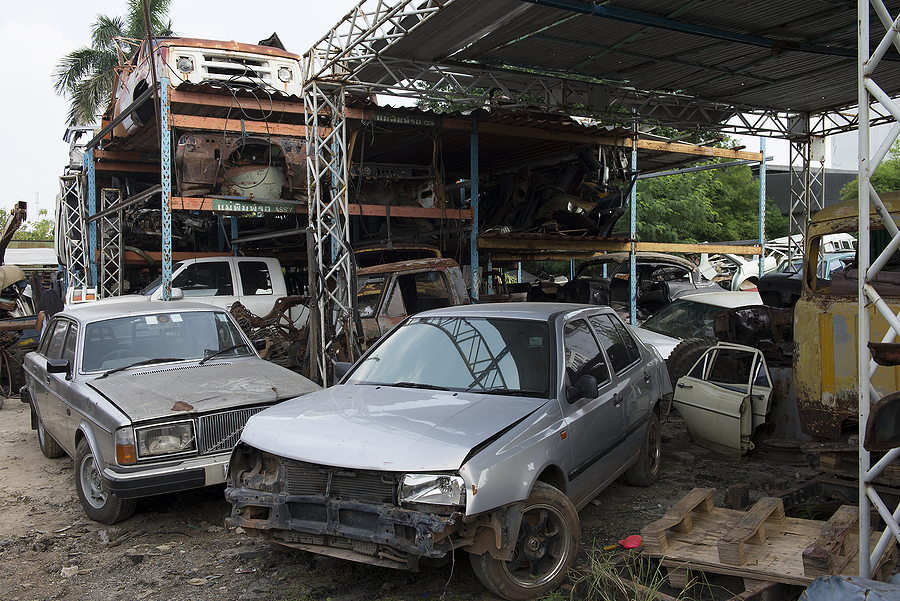
How Much Ferrous Metal Is in a Junk Car?
A typical passenger vehicle weighs around 3,175 pounds (roughly 1,440 kg). About 75% of that weight is metal, including iron, steel, aluminum, copper, and zinc, according to industry analysis from SteelOnTheNet.
Steel alone accounts for the largest share. A typical passenger car contains roughly 1,830 pounds (about 830 kg) of steel. Estimates suggest steel makes up somewhere between 55% and 65% of a passenger car’s total weight, which means well over half your vehicle is ferrous metal.
What affects the amount of metal per vehicle?
Not every car carries the same amount of ferrous metal. Size and build type make a big difference. Here’s how average curb weights compare across common vehicle types:
- Compact / subcompact car: 2,500 – 3,000 lbs
- Mid-size sedan: 3,200 – 3,500 lbs
- Full-size sedan: 3,800 – 4,500 lbs
- Crossover / small SUV: 3,300 – 4,000 lbs
- Large SUV: 5,000 – 6,000+ lbs
- Pickup truck: 4,800 – 7,000+ lbs
Heavier vehicles like trucks and full-size SUVs contain more steel and iron overall, which is why they typically bring higher scrap payouts than smaller cars.
Types of Ferrous Metals Found in Junk Cars
Ferrous metals are those that contain iron and have magnetic properties. Your junk car holds several kinds, each serving a different purpose.
Carbon steel
Carbon steel is the workhorse of any vehicle. It forms the body panels, doors, trunk lid, bumpers, and the chassis. Flat steel products used for the body and frame add up to roughly 667 kg in a typical car, making steel the single largest recyclable material in the vehicle.
Cast iron
Cast iron shows up in heavier engine components, such as older engine blocks and brake rotors. These dense parts pack a lot of weight into a small space, which adds to your car’s total scrap value.
High-strength and long steel products
Long steel products handle the tough jobs, appearing in the drive, suspension, engine, transmission, and steering. These components account for around 163 kg of steel in a typical vehicle.
Stainless steel
Stainless steel turns up in exhaust systems, trim pieces, and some fasteners. While it makes up a smaller portion of the car, it’s worth noting because stainless typically sells for more than standard scrap steel.
Why Ferrous Metal Matters for Junk Car Sales
The amount of ferrous metal in your car directly shapes what you’ll earn when you sell it. Scrap value is largely a weight game, so the heavier your vehicle, the more it’s generally worth.
Current scrap metal prices
Scrap prices shift with the market, but recent figures give a helpful benchmark. Complete junk cars have averaged around $172 per ton, within a range of roughly $145 to $195 per ton. Standard scrap steel runs about $0.08 to $0.13 per pound, while stainless steel can fetch $0.28 to $0.41 per pound.
Those per-pound numbers may seem small, but weight adds up fast. A full-size vehicle carrying over two tons of steel can still deliver a meaningful payout, even when it no longer runs.
How weight affects your payout
Because ferrous metal makes up more than half of your car’s weight, a bigger, heavier vehicle almost always means more cash. A compact car and a full-size pickup are priced very differently for exactly this reason.
An accurate assessment of your vehicle’s weight and metal content ensures you receive a fair offer, so it pays to work with a reputable Indianapolis junk car buyer who prices honestly.
From Junk Car to Scrap Metal: How Recycling Works
Once you sell your junk car, it enters a recycling stream built around recovering its metal. First, fluids and reusable parts—like the battery and catalytic converter—are removed. The remaining shell is then shredded into small pieces.
Powerful magnets pull the ferrous metal out of the shredded mix, separating steel and iron from aluminum, copper, and other materials. Because ferrous metals are magnetic, this separation is highly efficient, and steel and iron form the largest share of recovered material.
That recovered steel gets melted down and reused to make new products, from fresh auto parts to construction materials. Recycling a single car keeps thousands of pounds of metal out of landfills and reduces the need to mine and refine new ore, a real win for the environment.
How to Maximize Your Junk Car’s Value
You can take a few simple steps to get the best possible price for your vehicle:
- Provide accurate details. Share your car’s year, make, model, mileage, and condition. Honest disclosure helps buyers give you a fair, accurate quote.
- Keep the valuable parts. A catalytic converter and other salvageable components can boost your offer, so don’t strip them out before an evaluation.
- Know your vehicle type. Heavier trucks and SUVs carry more steel and iron, which typically means a higher payout.
- Choose a trusted buyer. Look for an established, licensed cash for cars company that offers free towing and pays cash on the spot.
Frequently Asked Questions
How much of a junk car is metal?
Roughly 75% of a typical car’s weight is metal. Steel and iron account for the majority, often more than half the vehicle’s total weight.
How much does the average junk car weigh?
It depends on the type. A compact car weighs about 2,500 to 3,000 pounds, a mid-size sedan around 3,200 to 3,500 pounds, and a pickup truck or large SUV can exceed 5,000 to 7,000 pounds.
How much is scrap steel worth?
Recent prices for standard scrap steel run about $0.08 to $0.13 per pound. Complete junk cars have averaged around $172 per ton, generally ranging from $145 to $195 per ton.
Can I sell a car that doesn’t run?
Yes. Even a non-running or heavily rusted car holds significant value thanks to its ferrous metal content. Many buyers pay cash for vehicles in any condition.
What is ferrous metal?
Ferrous metal is any metal that contains iron and has magnetic properties. In cars, this includes carbon steel, cast iron, and stainless steel.
Turn Your Junk Car Into Cash Today
Your junk car may look like a lost cause, but the steel and iron inside carry real, recoverable value. With more than half the vehicle made of ferrous metal, even an old, non-running car can still earn you a solid payout.
Ready to find out what your vehicle is worth? Contact Zore’s Junk Cars in Indianapolis, Indiana for a free quote. We offer free towing and instant cash payment so you can clear out that old car with no hassle. Get paid on the spot today.
Related Posts:
How Scrap Metal Weight Determines Your Junk Car’s Cash Value
Which Metals are Most Valuable in a Junk Car?